Building a Driveway That Lasts: Sub-Bases, Edging and Drainage
Most driveway failures start underneath. What to ask about excavation, sub-bases, edging and drainage, whatever surface you choose.

Most driveway failures have little to do with the surface. Sunken ruts, loose blocks, cracked tarmac and standing puddles almost always come back to what lies underneath: a thin or poorly compacted base, weak edging, or nowhere for the water to go. Whatever surface you choose, these are the details to ask about.
Excavation and sub-base
A new drive starts with digging out to firm ground and laying a sub-base of crushed stone, compacted in layers. For a typical tarmac drive, that means excavating to around 200–250mm and laying 150–200mm of Type 1. Where the ground is soft, or the drive takes heavier vehicles, it needs to go deeper.
Edging
Every drive needs fixed edges to stop the surface spreading. Kerbs, block paving edging or a concrete haunch hold everything in place, and on a tarmac drive a block paving border also gives a neat finish.
Tarmac: two layers, laid hot
A properly built tarmac drive has a 50–60mm binder course, laid hot and rolled, with a 25–30mm wearing course on top. Specialists in tarmac driveways in Coventry can often resurface a sound existing drive in one to two days rather than starting again, and recommend sealing every three to five years.
Block paving: bedding and pattern
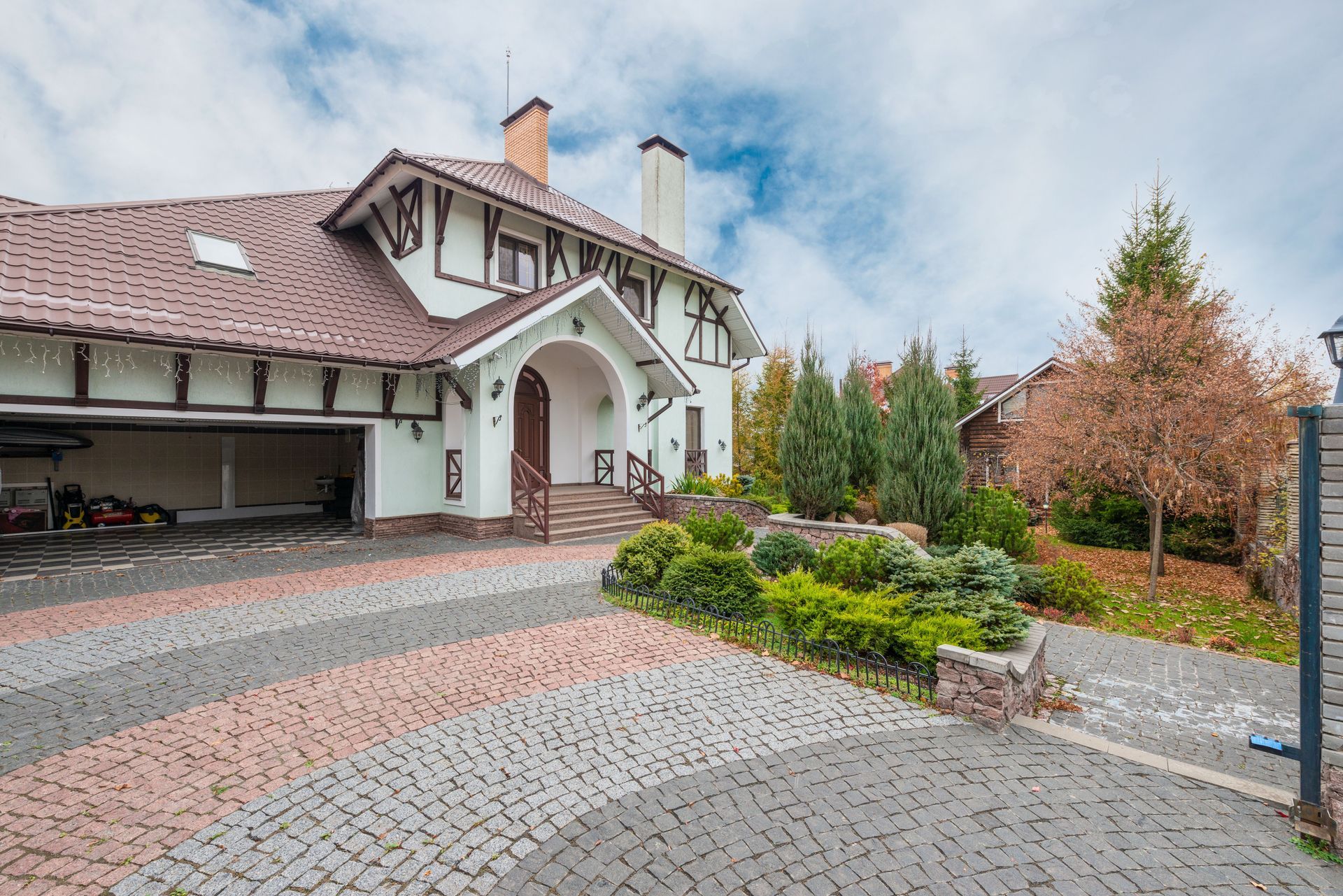
Blocks have traditionally been bedded on sharp sand, but many installers now use clean 6mm granite chippings instead. Herringbone is the strongest pattern for a driveway, because the blocks lock together under turning wheels. A good block paving company in Coventry will also match the block to the job, with standard 50mm blocks for most homes and 60–80mm blocks for heavier vehicles or regular deliveries.
Drainage and falls
Water has to go somewhere. A standard drive is laid to fall towards a channel drain, soakaway, lawn or border, while permeable block paving, or resin bound on a porous base, lets rain soak straight through. This also matters for planning: more than 5m² of hard surface in a front garden that drains onto the road usually needs permission.
Patios follow the same rules
A patio is built on the same principles. It needs a compacted base, falls that carry rain away from the house and a finished level at least 150mm below the damp-proof course. Many homeowners have a new patio laid at the same time as their drive, which means one survey, one set of levels and one team on site.
Ask any installer how deep they will dig, what edging they will use and where the water will go. For more on choosing a driveway company, see our driveways and paving category.
Ready to work with Lexsee Business Directory?
Let's connect! We’re here to help.
Send us a message and we’ll be in touch.
Agency Contact Form
More Business Tips, Tricks & Tools
Lexee Blog